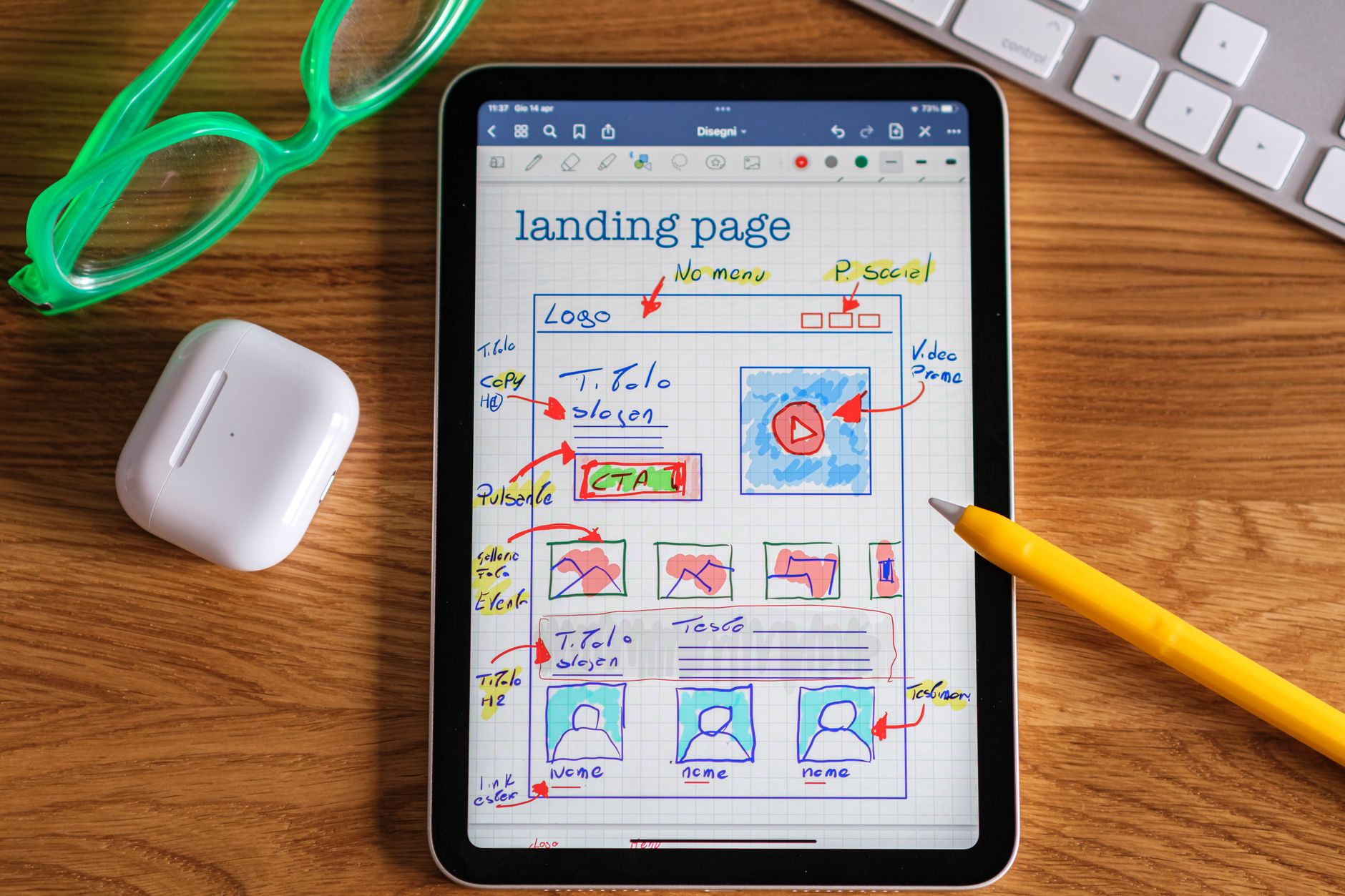
UX vs UI vs web designer: where the lines actually sit
Ask three agency directors to define a UX designer and you'll get three answers. Some shops fold all of it into one "designer" seat. Others run separate UX, UI and web design teams, each with its own lead and its own tooling.
The confusion isn't harmless. It costs people money at interview when they can't say which job they're applying for, and it leaves agencies hiring the wrong person because the brief said one thing and meant another.
We read a lot of agency design briefs, and the titles rarely match the work. So here is the honest breakdown: what UX, UI and web design mean day to day inside an agency, where they bleed into each other, and how to tell which one suits you.
What a UX designer does in an agency
UX is about how the thing works before anyone has decided how it looks. A UX designer figures out what a user is trying to do, what gets in their way, and what order the screens should come in.
On a normal agency week, that looks like running user interviews, mapping a checkout flow, sketching wireframes in Figma, and arguing with a product owner about why the three-step form should be one step. Very little of it is pretty. Most UX deliverables are grey boxes and arrows.
The output is usually some mix of these:
- User flows and journey maps
- Low-fidelity wireframes
- Information architecture, meaning what sits in the menu and what's buried three clicks down
- Usability test findings, often from watching five people fumble through a prototype
Good agency UX people are comfortable being wrong in front of clients. They'll show a client research that contradicts the client's own opinion, and they'll do it without making the room defensive. That soft skill matters more than any tool. We've seen skilled wireframers stall in agency life because they couldn't handle a stakeholder who "just knew" what customers wanted.
If you like the research and problem-shaping half of the job, browse the current UX jobs to see how agencies word these roles. You'll notice the strongest briefs talk about outcomes and metrics, not just Figma.
What a UI designer does in an agency
UI picks up roughly where UX hands over. Once the flow and the wireframes exist, the UI designer decides what the interface actually looks and feels like on screen.
That means typography, colour, spacing, button states, iconography, and the small motion details that tell you a tap registered. A UI designer builds and maintains the design system so twelve screens don't end up with nine slightly different shades of blue.
Day to day, a UI designer is deep in a design tool building high-fidelity mockups, defining component libraries, and handing developers the exact specs they need. Pixel precision is part of the job. So is knowing when a gorgeous idea can't be built in the sprint and quietly designing the version that can.
Here's a distinction worth holding onto. UX asks "should this button exist and where does it lead?" UI asks "what does this button look like, how big is the tap target, and what happens on hover?" Both questions are design. They use different muscles.
A strong UI designer in an agency also thinks about accessibility as a default. Colour contrast that passes WCAG AA, focus states that work with a keyboard, text that resizes without breaking the layout. Clients don't always ask for it, but the agencies that get it right avoid a lot of awkward retrofits later. If this is your lane, the live UI jobs board shows which studios treat UI as a craft rather than a colouring-in exercise.
Where the web designer fits
Web designer is the oldest title of the three, and the most abused. In some agencies it's a senior role covering everything from concept to build. In others it's a junior making banner ads and template tweaks in WordPress.
The useful definition is this. A web designer designs and often builds websites specifically, rather than apps or product interfaces. They tend to work across the whole surface of a site: layout, visual style, responsive behaviour, and frequently the front-end code that ships it.
That last part is the real separator. Plenty of web designers write HTML and CSS, know their way around a CMS, and can hand a client a finished, editable site. UX and UI specialists usually stop at the design file and pass it to a developer.
Web design roles suit people who like owning the full picture and seeing a site go live with their name on the build. The trade-off is breadth over depth. You're rarely running formal user research or maintaining a fifty-component design system, but you are shipping real work every week.
If you sit between design and code, it's worth glancing at both the designer jobs and the developer jobs listings. Web designers who can do a bit of both are hard to replace, and the salary bands reflect it.
The overlap, and why agencies blur the titles
Here's the uncomfortable truth. At a small agency, one person often does all three jobs and gets called whatever the client responds to best.
A ten-person studio can't afford a dedicated researcher, a dedicated UI specialist and a dedicated web designer for a five-week website project. So they hire a "product designer" or a "digital designer" who wireframes on Monday, styles on Wednesday, and QAs the build on Friday. The title on the contract is half marketing.
Agency size is the biggest predictor of how specialised these roles get:
- Under 15 people: expect one designer doing UX, UI and web, sometimes front-end too
- 15 to 60 people: UX and UI start to split, web design sits alongside them
- 60-plus, or a dedicated product team: genuine specialists with narrow remits and clear handovers
This is why the same job title can pay very differently and demand wildly different skills. A "UX/UI designer" role at a boutique branding shop and the same title at a fintech product agency are not the same job. Read the responsibilities, not the header.
We'd argue the blurring is fine early in your career and a problem later. Juniors benefit from touching everything. Once you're aiming for a senior or lead role, you need a clear centre of gravity, because that's what agencies pay a premium for.
Salaries and demand: what we see on agency briefs
We won't quote a national average, because the spread inside agencies is too wide for it to mean anything. What we can tell you is the shape of the salaries advertised on our own board.
Junior UI and web design roles tend to open around the mid-20s. Mid-weight UX and UI designers cluster in the mid-30s to mid-40s depending on London weighting. Senior and lead design roles, especially UX-heavy ones with research and strategy attached, push well past that and into the 50s and 60s at product-focused agencies.
Web design roles skew slightly lower at the junior end and reward the front-end coders at the senior end. The pattern is consistent: the closer you sit to measurable business outcomes, the more you earn. A designer who can point at a conversion lift is worth more than one who can only point at a nice-looking screen.
That's also why conversion-focused work commands its own budget line. If numbers motivate you, the CRO jobs world overlaps heavily with UX, and agencies increasingly want designers who understand testing and analytics.
Which role should you actually go for?
Pick based on what energises you on a wet Tuesday afternoon, not on which title sounds most senior.
Go for UX if you like the detective work: talking to users, untangling messy problems, and being comfortable when your first idea turns out wrong. You'll spend more time in workshops and spreadsheets than you might expect, and less time making things beautiful.
Go for UI if the craft is the point. If you notice bad kerning on billboards and you care about the exact easing on a menu animation, this is where your attention to detail earns money. You'll need patience for design systems and a good relationship with developers.
Go for web design if you want to own the whole site and ship it. Breadth is your strength, and learning front-end code makes you far more valuable than staying purely visual.
Whatever you choose, the interview advice is the same. Show the thinking behind the work, not just the finished screens. Agencies hire the designer who can explain why, because clients pay for reasoning as much as pixels. We go deeper on that in our guide to what hiring managers really look for.
Sort out which of the three you are, learn to defend your choices in a portfolio review, and you'll stand out in a field where half the applicants still can't tell you the difference between UX and UI. When you're ready to move, the designer jobs board is a good place to start.